You're Not Too Late. The Only Deadline That Matters Is Tomorrow.
Starting finance recruiting late feels like falling behind. A student on why the real risk is paralysis, not the calendar, and how to catch up.
By Tabitha Paik

3 min read
One day, you're meeting your new freshman roommate and sitting in your first college lecture. The next day, it seems like everyone has a plan for the future, complete with an internship titled with words you've never heard before. It feels like your peers are talking in a secret code they all learned while you were figuring out your favorite dining hall. Now, you feel behind the curve, confused, and stressed about what the future may (or may not) hold.
Maybe you have a plethora of interests. You've enjoyed the quantitative exploration of your linear algebra class, the in-depth analysis of Asian American poetry, feeling connected to yourself in Language of the Body, and stock valuation in Corporate Finance. You spent your summer researching dance history during a hyper-specific period in German history, using your free time to see the works of your favorite painter in person.
Junior year hits; the job market is bad, you're struggling to narrow down what career path to pursue, and securing that coveted Junior Summer Internship is more complicated than expected. LinkedIn contributes to your uneasiness, yet peering at it is as much entertaining as it is addictive.
It's no secret that high finance recruitment has only gotten harder with the worsening economy and the rise of AI. University students only start earlier, and entry-level jobs expect more than they did even ten years ago. Interview processes have gotten longer and more technical while everyone claims, "It's not what you know, but who you know!"
So, you start sending some messages on LinkedIn. Your first couple of coffee chats are a little rocky, but the process is starting to become a little clearer. You decide to throw your metaphorical hat in the ring, that resume into who-knows-where, and you receive a HireVue link ten minutes later. You learn quickly that you can't do a virtual interview on the spot, that they deserve research and preparation like a normal interview. Not only that, but you see that recruitment is achievable, with the right tools. Instead of doing seemingly unending research on options for which finance path to take, you can use Internvest's clear outline on the ten paths to high finance. Instead of constantly googling each firm's interview questions and what kind of technical knowledge they look for, you can utilize Internvest's plethora of study materials, scheduled so you can progressively learn everything without cramming the night before.
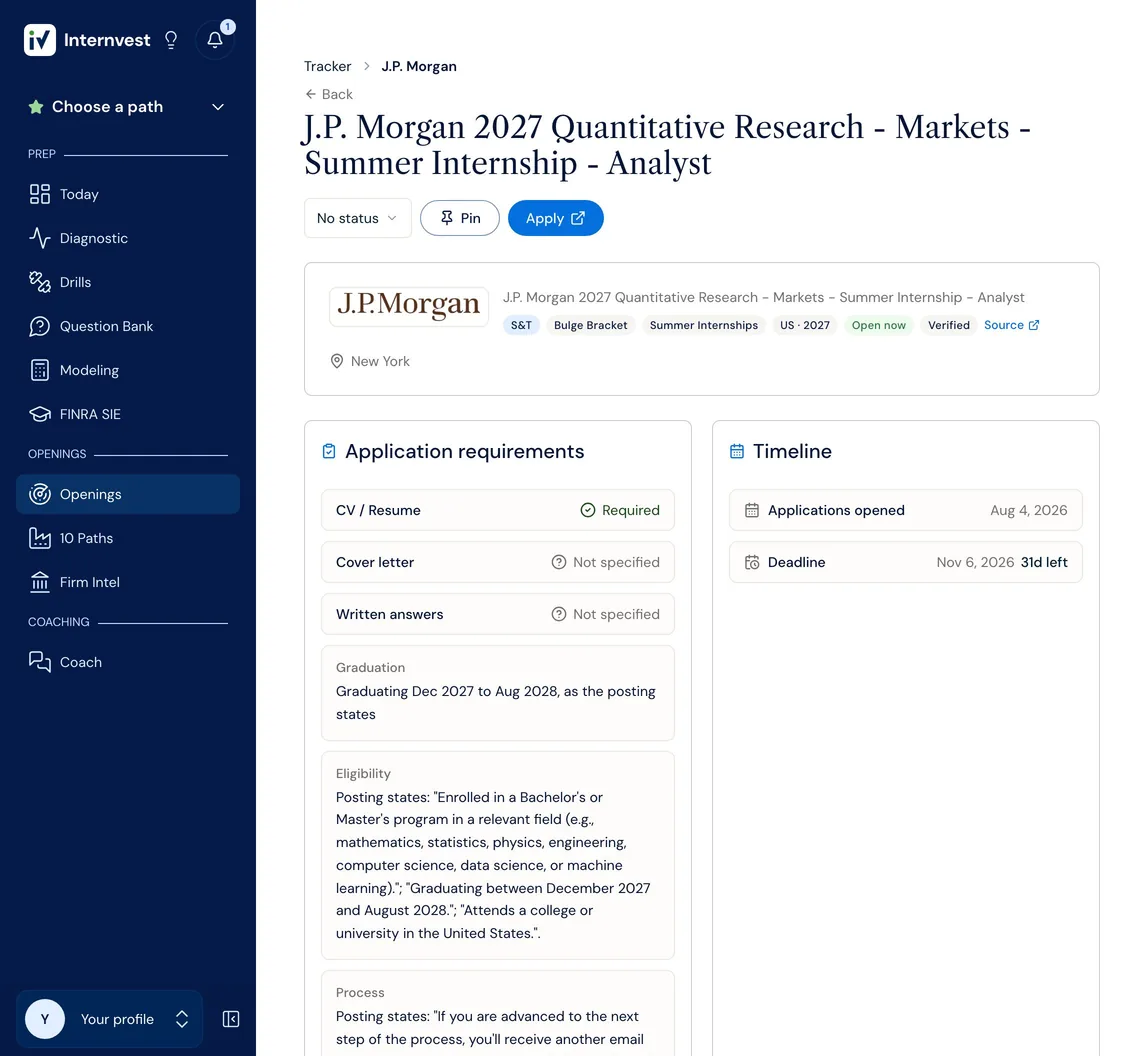
Networking might get you in front of the right people, but it is up to you and your technical knowledge to secure an offer. Internvest can and will get any applicant up to speed in the recruitment process. With its constantly updating opportunity tracker to help you not miss out on any important deadlines, alongside firm-specific preparation tools for tricky technical interviews, Internvest takes the skills you have built up from your lived experiences and helps you truly put them towards your career goals.
I spent weeks considering recruitment. Instead of thinking about how those weeks could have been spent studying for technical interviews, or networking, or writing cover letters, I reframed my perspective. I used them to hone my communication skills, set myself apart as an applicant, and dive deep into all of the things I was intellectually curious about. Starting late isn't necessarily the problem, although it's impossible to deny that deadlines can come up faster. The problem is the paralysis that lets qualified candidates think they are already too far gone. My advice to you: don't let yourself be overwhelmed with the things you simply don't know yet. There are tools to get you up to speed, and Internvest is backed by C-suite employers who conduct those desired Superday interviews. With the help of Internvest, the only time too late to start? Tomorrow.